



Tiger tailed seahorse (with 3D animated model)
It is a small marine fish of the seahorse genus in the family Hippocampus. Usually living in tropical and subtropical coral reef areas, it is known for its unique appearance and behavior. The body is horse shaped, with a pair of big eyes on the head and a curled tail that can firmly grasp seaweed or seaweed, thus maintaining stability in the water flow. Their body length is generally around 15 centimeters, and their body color varies from yellow, orange to red, sometimes with black or white stripes. This protective color helps them hide in the underwater environment. It is a species where males become pregnant, and females lay eggs in the male's brood sac, which is then incubated and protected by the male until the birth of a small seahorse.

Leopard shark (with 3D animated model)
Belonging to the true shark family and the leopard shark genus, it is a marine organism that lives in tropical and subtropical waters. Large in size, adult individuals can grow up to 3.5 meters in length and weigh up to 200 kilograms. Their body color is usually dark gray or brown, covered with leopard like patterns, which is also the origin of their name. It is a nocturnal predator that usually hides in caves or rock crevices on the seabed during the day and comes out to forage at night. Mainly feeds on fish, crustaceans, and other marine organisms. Strong reproductive ability. Although leopard sharks are large in size, they do not pose a threat to humans. Currently listed as a vulnerable species.
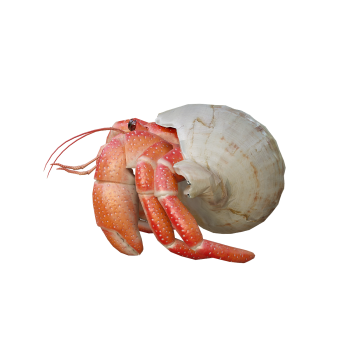
Hermit crab (with 3D model animation)
It is a crustacean that lives in the ocean and is known for its unique way of life. Belonging to the family of hermit crabs in the order Decapoda, they have a soft body and a hard shell, and usually reside in empty snail shells to protect themselves. Their body structure adapts to their lifestyle, with their abdomen and chest curved to perfectly fit the shape of the snail shell. They are diverse in species and widely distributed, and can be found along coastlines from tropical to temperate regions. Usually nocturnal animals, they hide in snail shells during the day and come out to forage at night. Mainly feeds on algae, small invertebrates, and organic debris. Growing up, one will constantly replace the casing

Mouse (with 3D animated model)
It is a small rodent known for its flexible body, keen senses, and rapid reproductive ability. Having sharp front teeth, these teeth will continue to grow, so it is necessary to constantly gnaw on hard objects to grind them. It is a nocturnal animal with excellent hearing and smell, but relatively weak in vision. It is an omnivorous animal with a wide range of food sources. Highly adaptable, able to survive in various environments, from cities to wilderness, from cold regions to tropical rainforests. The reproduction speed is very fast, and a pair of mice can produce a large number of offspring in a short period of time. Plays an important role in scientific research, especially in the fields of genetics and medical research.

Hippopotamus (cub) 3D model animation
It is a large herbivorous mammal mainly distributed in rivers, lakes, and swamps in Africa. Adult hippopotamus can weigh up to 1500 to 3200 kilograms and grow up to 4 to 5 meters in length, making it the largest mammal in freshwater ecosystems. Has short and sturdy limbs, thick skin, and can resist parasites in water. The skin secretes a red liquid that has sunscreen and antibacterial properties. It is a nocturnal animal that spends most of its day resting in water to avoid high temperatures and predators. It is a social animal, usually led by a male and consisting of one or more females and offspring.

Hippopotamus (Male) 3D Model Animation
It is a large herbivorous mammal mainly distributed in rivers, lakes, and swamps in Africa. Adult hippopotamus can weigh up to 1500 to 3200 kilograms and grow up to 4 to 5 meters in length, making it the largest mammal in freshwater ecosystems. Has short and sturdy limbs, thick skin, and can resist parasites in water. The skin secretes a red liquid that has sunscreen and antibacterial properties. It is a nocturnal animal that spends most of its day resting in water to avoid high temperatures and predators. It is a social animal, usually led by a male and consisting of one or more females and offspring.

Fox 3D Model Animation
The fox genus is a species of canidae that includes 12 different types of foxes. The body length is usually between 45-90 centimeters, the tail length is 25-60 centimeters, the weight is 2-10 kilograms, and the largest exceeds 15 kilograms. Known for its pointed ears, triangular head, and slim figure, it has a variety of fur colors, including red, gray yellow, etc. They mainly inhabit environments such as forests, shrubs, grasslands, deserts, and sometimes also live in the outskirts of cities. It is a nocturnal animal that mainly feeds on small mammals such as wild mice and rabbits, and also eats frogs, fish, birds, insects, etc. Species are widely distributed worldwide, including Asia, Africa, Europe, and North America

3D animation model of white fronted high footed spider
It is a large indoor spider with a body length of about 20-30 millimeters and a total length of up to 100-130 millimeters. They usually hide in the gaps of roofs or cabinets during the day and come out to forage at night, mainly preying on insects such as cockroaches, flies, and moths. The white fronted spider is a nocturnal animal that prefers slightly darker environments. Non toxic, harmless to humans, and can even help control the number of cockroaches in the home. The egg is disc-shaped, and female spiders exhibit egg guarding behavior. In addition, they exhibit a unique ejection phenomenon during mating, with male spiders autonomously ejecting to avoid being killed by female spiders.

Pangolins (with 3D animated models)
It is a terrestrial mammal of the family Pangolidae in the order Lepidoptera, with a total of 8 species. Characterized by a conical head, slender snout, thick limbs, sharp claws, and a flat tail, the body is covered with tile shaped arrangement of hard keratinized thick armor plates, hence the name. Mainly distributed in southern China, including Fujian, Guangdong, Guangxi, Yunnan, Guizhou, and other places. It is a nocturnal animal that hides in burrows during the day and goes out to forage at night. Its main food source is termites, which play an important role in maintaining ecological balance. Due to overfishing and habitat destruction, pangolin resources have sharply decreased and are listed as critically endangered species on the IUCN Red List of Threatened Species.

Wolf skull
Wolves are carnivorous animals in the family Canidae. There are a total of 11 subspecies. Medium and symmetrical body shape, slender limbs, toe mobility, conducive to fast running. The head and palate are pointed, the face is long, the nose protrudes, the ears are pointed and upright, the sense of smell is sensitive, and the hearing is developed. Canine teeth and split teeth are well-developed. The fur is thick and long. The forefoot has 4-5 toes, while the hind foot usually has 4 toes; Claws are thick and dull, unable to stretch or slightly able to stretch. Hairy tail, more developed. It is a nocturnal animal that is good at running quickly and over long distances. It prefers to live in groups and often curls up alone or in pairs in caves during the day. However, it also comes out for activities during the day in sparsely populated areas. Come out at night to search for food.

Wombat Bear
The wombat is a mammal of the family wombatidae in the order Diptera. The fur is gray brown. The lifespan is about 15 years. The wombat is mainly distributed in forests, hills, and coasts of Oceania. It inhabits forests, mountains, and wilderness, and occasionally appears near farmland. Cave dwelling, solitary camping, digging and living at night. Herbivores feed on grass, herbaceous plants, bark, and roots. The wombat was found in Australia 20 million years ago, but it was not until July 1797 when a European merchant ship died in the Bass Strait of Australia and the sailors on board fled to a nearby island that they first saw this animal.

Tolypeutes tricinctus
The Brazilian three banded armadillo is a species of armadillo unique to Brazil. The shell is divided into three parts, with the front and back parts covered by a single non stretchable bone scale. The middle part of the scale is in a band shape and connected to the muscles, allowing for free expansion and contraction. You can curl up your body into a ball shape to defend against natural enemies; Lifetime growth. Distributed in Brazil, inhabiting different living environments such as forests, grasslands, and semi deserts. I enjoy nighttime activities, am good at digging underground holes, and am also skilled at swimming. Fulai Ge "is the mascot of the 2014 Brazil World Cup, based on a Brazilian three armed armadillo, which is a unique species of Brazil.

porcupine
The porcupine family is a family of rodents in the mammalian order Rodentia. Undergraduate is the largest rodent with a robust body, covered in round or flat spines throughout the body, and with spines or bristles on the tail. Eat plant roots, tender leaves, bamboo shoots, wild fruits, as well as corn, potatoes, fruits, etc. The spines on the bodies of porcupines have evolved over a long period of time. In order to avoid attacks from natural enemies and extinction, the fur on their bodies gradually turned into hard spines. Compared with other mammals with long spines, their spines are easy to fall off, but they quickly grow back.

lizard
Lizards are reptiles belonging to the family Varanidae in the order Scorpaeniformes. Lizards are distributed on all land except for Antarctica and a few Arctic regions. Lizards have a relatively fixed living environment, with only a few living in high mountains or water. There are approximately 5461 species of lizards in the world, which are one of the most charming reptiles due to their diverse body color, appearance, and obedience. Many species are kept as pets. Modern genetic research has shown that lizards and snakes are a group, with snakes evolving from lizards. Lizards have a snake like body, thin scales, are four or five inches long, and have four limbs, hence they are also known as "four legged snakes".

Eurasian wild boar
The Eurasian wild boar is a medium-sized mammal belonging to the family Porcidae in the order Artiodactyla. Weight 90-200 kilograms; The body length is 1.5-2 meters, the tail length is 21-38 centimeters, and the ear length is 24-26 centimeters; Shoulder height is about 90 centimeters. Eurasian wild boars have extremely strong environmental adaptability. Their habitats span across temperate and tropical regions, ranging from semi-arid climates to tropical rainforests, temperate forests, semi deserts, and grasslands. The Eurasian wild boar originated in Europe and Asia and was widely introduced to North America, with a wide distribution range covering the Eurasian continent.

Popular Models
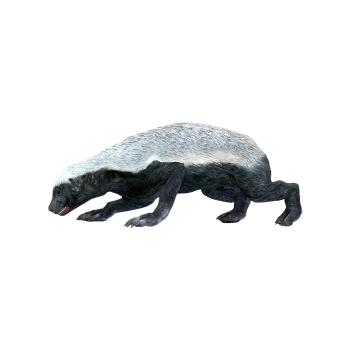
Honey Badger (3D animated model)
192 View
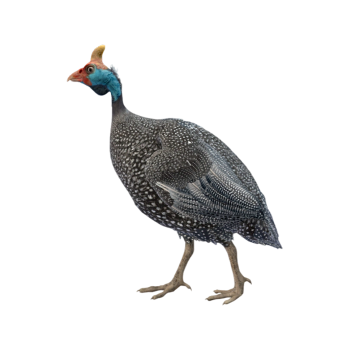
Guinea fowl (3D animated model)
163 View
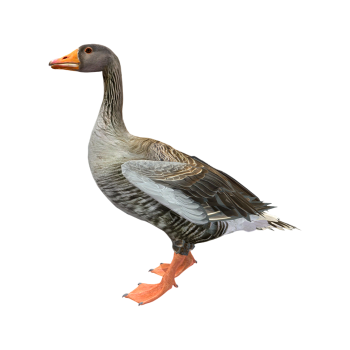
Wild Goose (3D animated model)
185 View
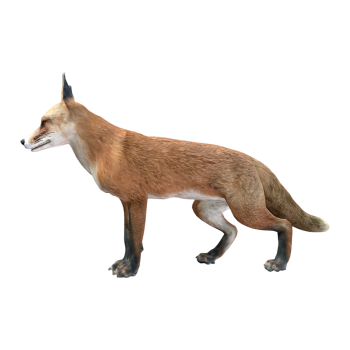
Red Fox (3D animated model)
153 View
Random Model
Jetmaster Zip Tee
742 View

Leather Handbag
882 View

William III Statue
960 View
Carhart Workwear Boots
517 View


Sega Mega Drive home game console
882 View
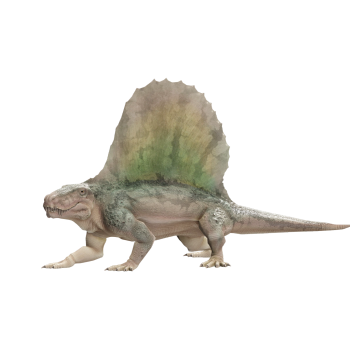
Heterodon (3D animated model)
197 View

Mount Yuyayako
933 View

Nike AirMax 270 sneaker
588 View

Stannern meteorite
898 View